Hakodate Hachimangu
Hokkaido · Hakodate
Hachiman Maritime Safety
Tsurugaoka Hachimangu
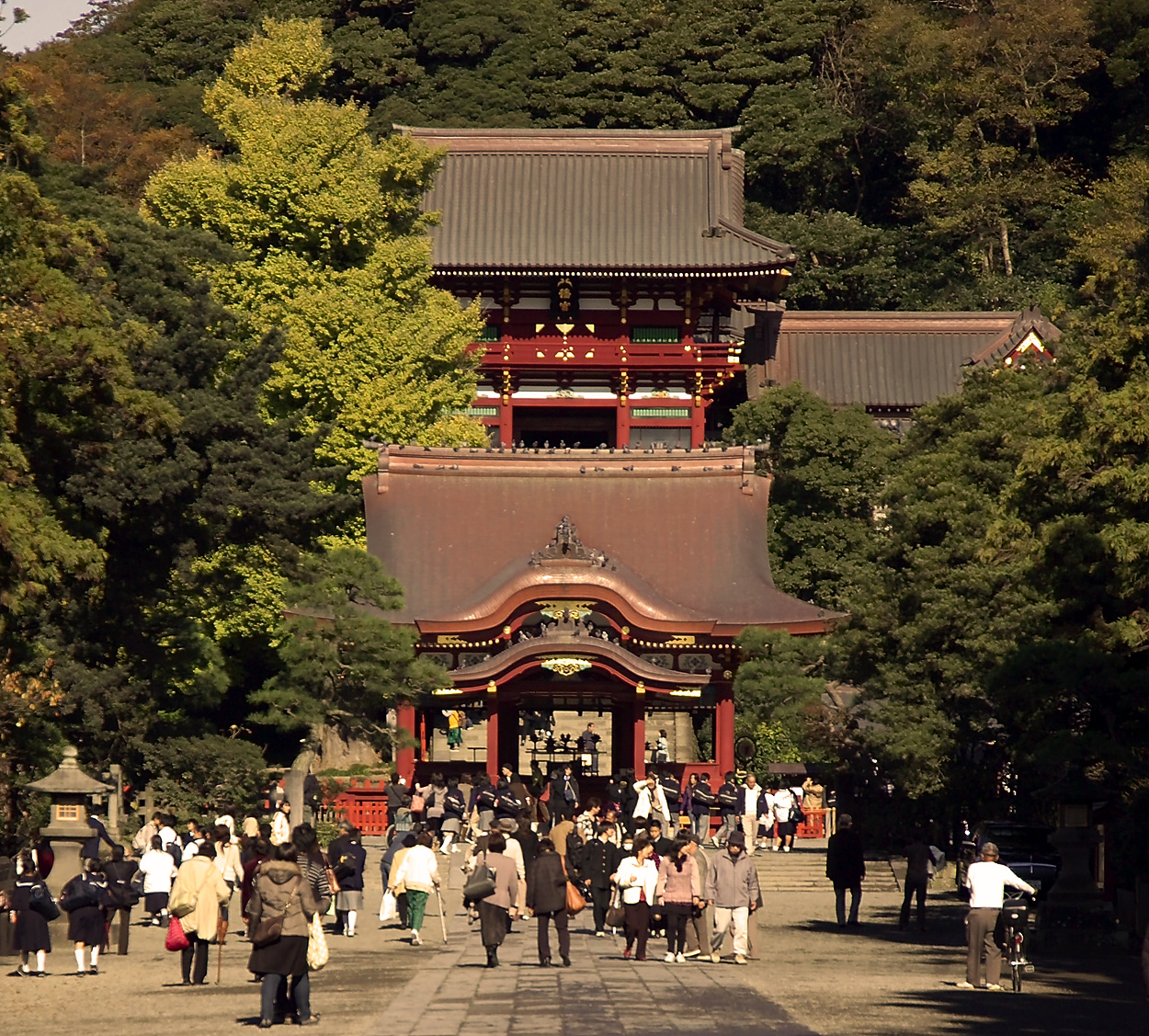
Tsurugaoka Hachimangu stands at the apex of Kamakura's grand boulevard, Wakamiya-oji, embodying the fusion of spiritual authority and political power that defined the Kamakura Shogunate. Founded by Minamoto no Yoriyoshi in 1063 and dramatically expanded by Yoritomo in 1180, the shrine was positioned to anchor an entirely new capital city built around it. The shrine complex includes lotus ponds, a dance stage where the tragic story of the dancer Shizuka Gozen unfolded, and the stairway where the assassination of Shogun Sanetomo took place in 1219. For nearly 700 years it simultaneously functioned as a Buddhist temple under the syncretic name Tsurugaoka Hachiman-ji. Today the shrine is the most visited site in Kamakura, drawing millions of visitors annually and serving as the spiritual center of one of Japan's most popular day-trip destinations from Tokyo.
Source: Azuma Kagami
Founded by Minamoto no Yoriyoshi after victory in the Former Nine Years' War
Yoritomo relocated shrine to current position as centerpiece of Kamakura
Ancient ginkgo tree (estimated 1,000 years old) toppled in storm
A giant ginkgo tree estimated at 1,000 years old, believed to have hidden the assassin of Shogun Sanetomo, fell in a storm in 2010. A shoot from the stump has since regrown.
Source: documented
The shrine's Yabusame (mounted archery) ceremony, held in September, preserves a martial tradition dating back to the Kamakura period.
Source: documented
Until the Meiji separation of Shinto and Buddhism in 1868, the shrine had been a combined Shinto-Buddhist institution for almost 700 years.
Source: documented
Location Coordinates
35.3256, 139.5566
2-1-31 Yukinoshita, Kamakura, Kanagawa
Sagami / Musashi
Kamakura Station (JR Yokosuka Line)
6:00-20:30
Partial - main approach accessible; steep stairs to upper shrine
The spiritual heart of Japan's first military government and the defining landmark of Kamakura, this shrine is essential for understanding the samurai culture that shaped Japanese civilization for seven centuries.
ข้อมูลจัดทำโดยทีม Jinja DB
Tsurugaoka Hachimangu stands at the apex of Kamakura's grand boulevard, Wakamiya-oji, embodying the fusion of spiritual authority and political power that defined the Kamakura Shogunate. Founded by Minamoto no Yoriyoshi in 1063 and dramatically expanded by Yoritomo in 1180, the shrine was positioned to anchor an entirely new capital city built around it. The shrine complex includes lotus ponds, a dance stage where the tragic story of the dancer Shizuka Gozen unfolded, and the stairway where the assassination of Shogun Sanetomo took place in 1219. For nearly 700 years it simultaneously functioned as a Buddhist temple under the syncretic name Tsurugaoka Hachiman-ji. Today the shrine is the most visited site in Kamakura, drawing millions of visitors annually and serving as the spiritual center of one of Japan's most popular day-trip destinations from Tokyo.
Tsurugaoka Hachimangu is located in Kamakura, Kanagawa. The full address is: 2-1-31 Yukinoshita, Kamakura, Kanagawa.
The enshrined deities are: Hachiman Okami, Ichikishimahime no Mikoto, Empress Jingu (Okinagatarashihime).
Tsurugaoka Hachimangu is known for: Victory, General Prosperity, Family Safety.
The nearest station is Kamakura Station (JR Yokosuka Line). It is about a 10-minute walk from the station.